Coming SoonHome Sleep Testing
CPAP Home Service Consulting LLC
A guide for new CPAP users

Your first experience with CPAP does not have to be difficult.

A well-matched mask, clear education and patient, professional support can make adapting to prescribed CPAP therapy feel much more manageable.

  • Understand what is normal during the adjustment period
  • Learn practical, non-clinical comfort routines
  • Know when to contact your DME or healthcare provider
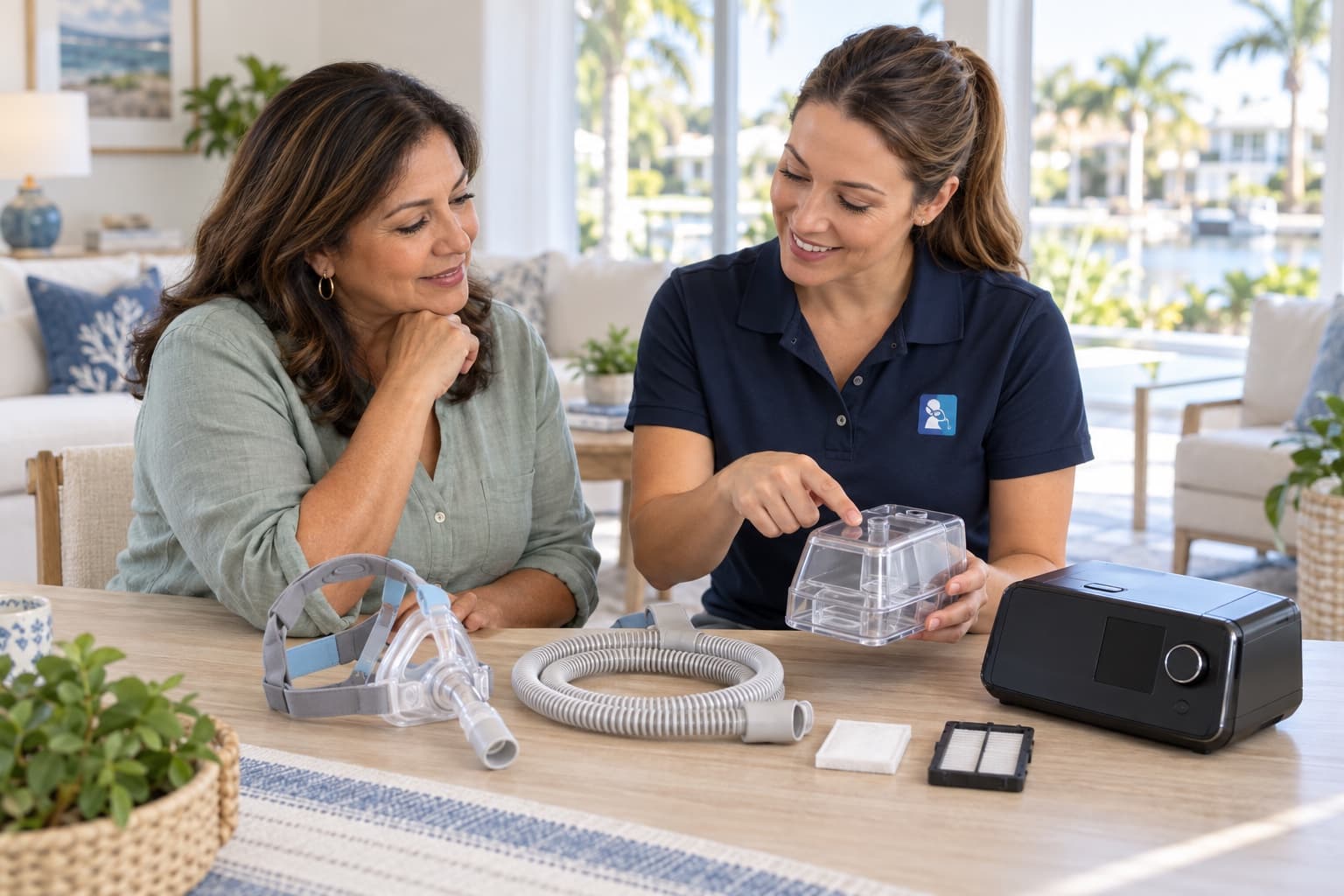
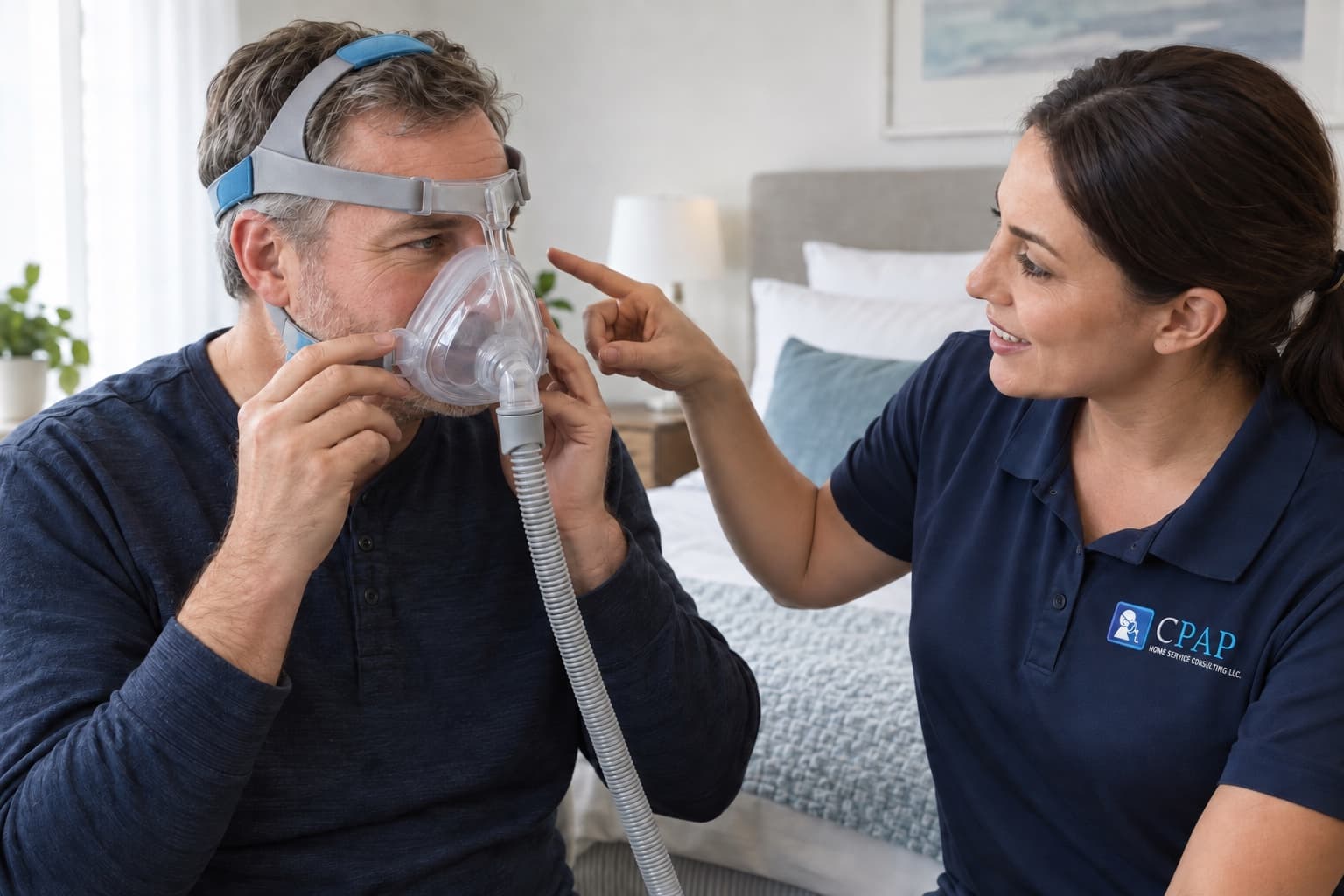
A CPAP support specialist showing a patient how to handle a prescribed mask and equipment at home

Clear education. Human support.

Remote or in-home, in English and Spanish.

Understand the cause

Practical education for the problems that interrupt CPAP use

We help you understand the equipment and build a repeatable routine without diagnosing conditions or changing prescribed therapy.

Non-clinical CPAP mask-placement education with a patient at home
01

Mask fit, leaks and facial comfort

The mask should create a stable seal without feeling painfully tight. Placement, cushion condition, headgear position, facial movement and mask style can all affect comfort.

What you may notice

  • Air blowing toward the eyes
  • Whistling, fluttering or seal noise
  • Red marks, pressure points or soreness
  • The mask shifting when you change position

How education can help

  • Practice a consistent placement sequence
  • Review cushion and headgear positioning
  • Recognize when the DME should reassess size or mask style
When to escalate: Persistent skin injury, pain or inability to obtain a seal should be reported to your DME or treating provider.
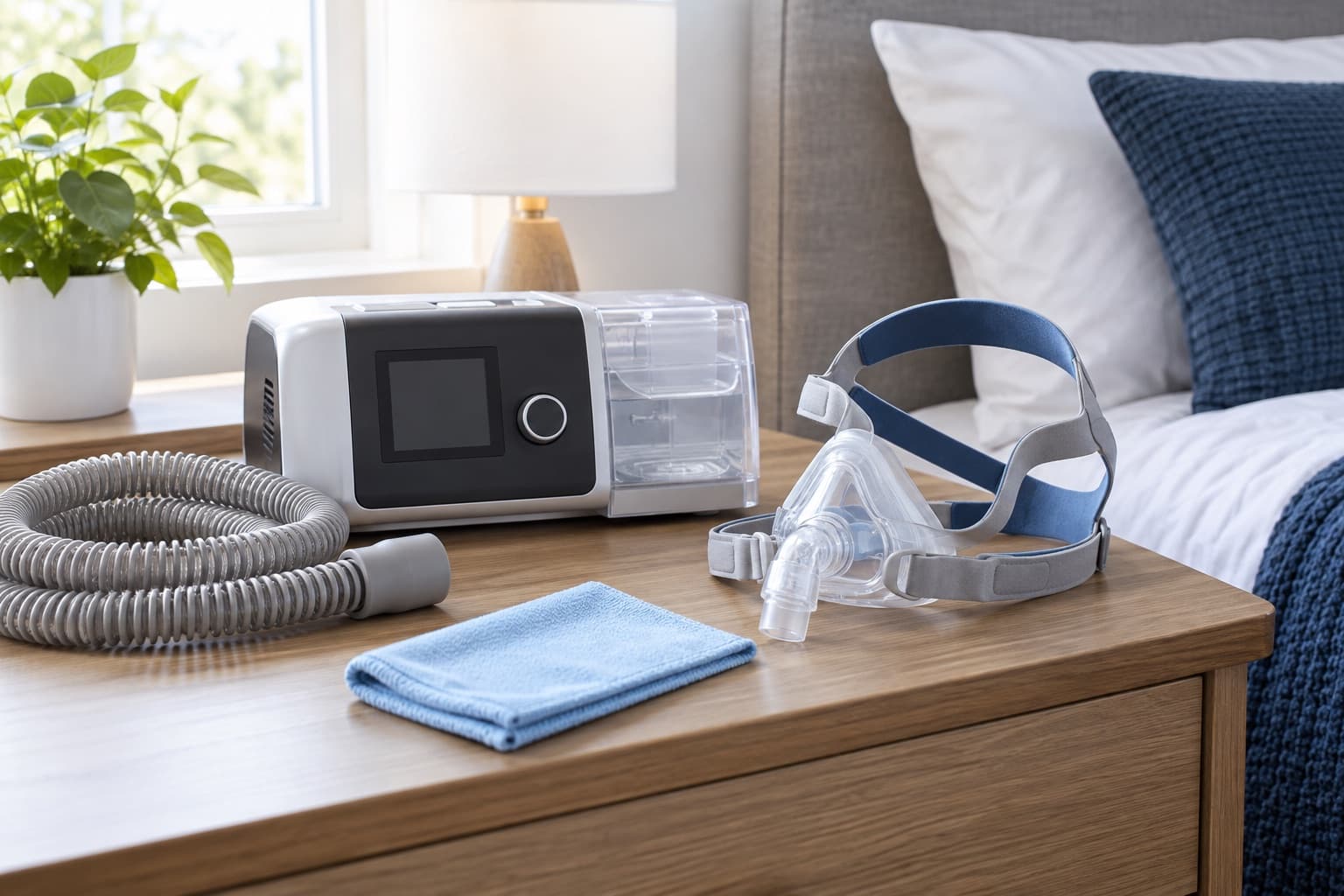
CPAP machine, humidifier chamber, tubing and mask prepared for equipment orientation
02

Airflow, dryness and humidification

Prescribed airflow may feel unusual during the first nights. Dryness, nasal stuffiness, mouth leak or swallowing air can make the experience harder.

What you may notice

  • A strong or unfamiliar airflow sensation
  • Dry nose, throat or mouth
  • Nasal congestion or mouth leak
  • Bloating or discomfort after swallowing air

How education can help

  • Understand normal user controls and prescribed comfort features
  • Review the humidifier and water-chamber routine
  • Prepare clear questions for the DME or treating provider
When to escalate: Do not change prescribed pressure settings on your own. Pressure intolerance, ongoing bloating or persistent symptoms require clinical follow-up.
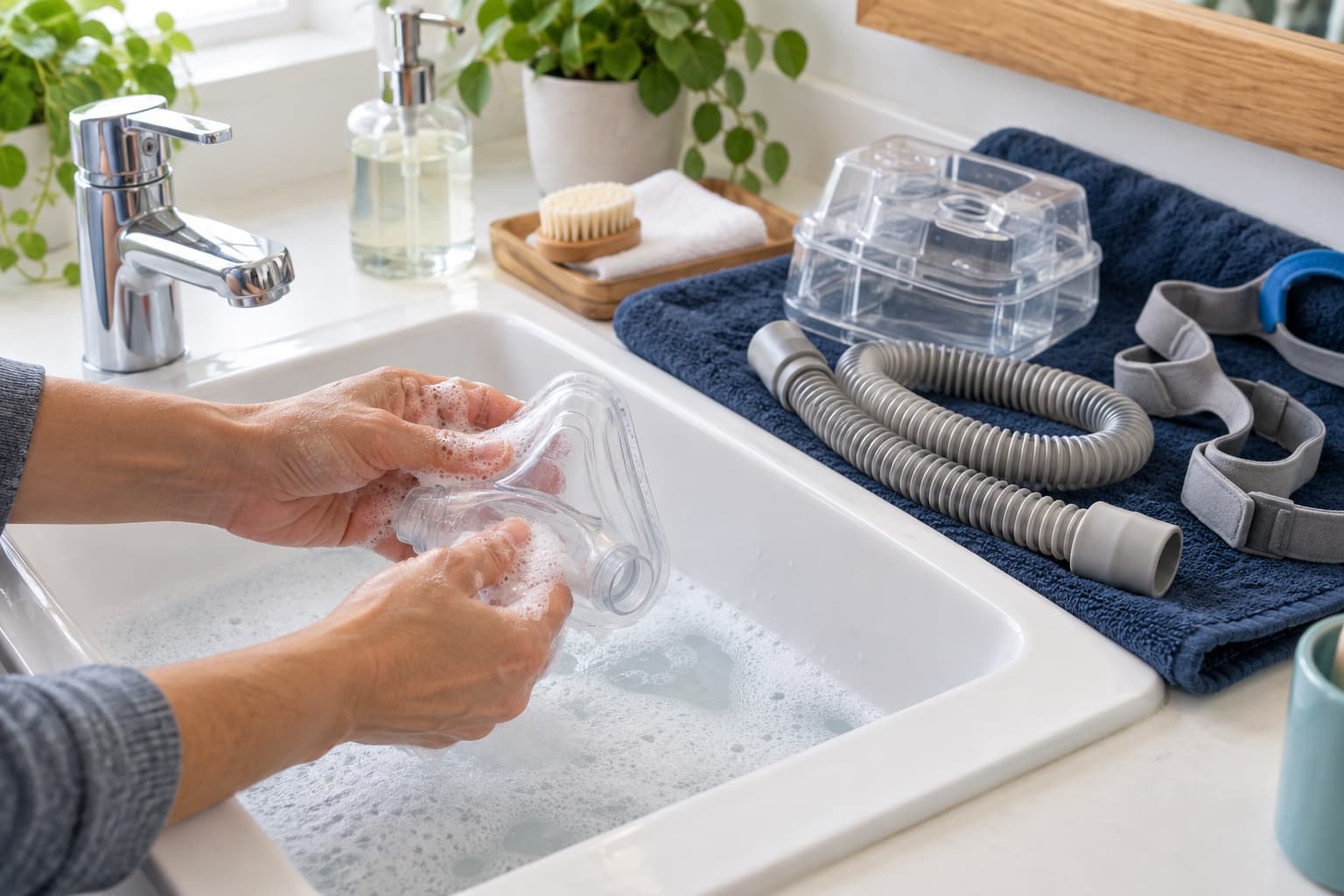
Routine cleaning and maintenance of CPAP mask, tubing and humidifier chamber
03

Condensation, cleaning and equipment setup

A clean, correctly assembled setup is easier to use and troubleshoot. Room temperature, tubing position, water level and component care can affect the nightly experience.

What you may notice

  • Water droplets or gurgling in the tubing
  • Loose tubing or chamber connections
  • Odor, visible residue or uncertainty about cleaning
  • Questions about filters and replacement schedules

How education can help

  • Follow manufacturer cleaning instructions
  • Organize a safe drying and reassembly routine
  • Learn which replacement questions belong with the DME
When to escalate: We provide education, not equipment repair. Stop using visibly damaged equipment and contact the supplier or manufacturer.
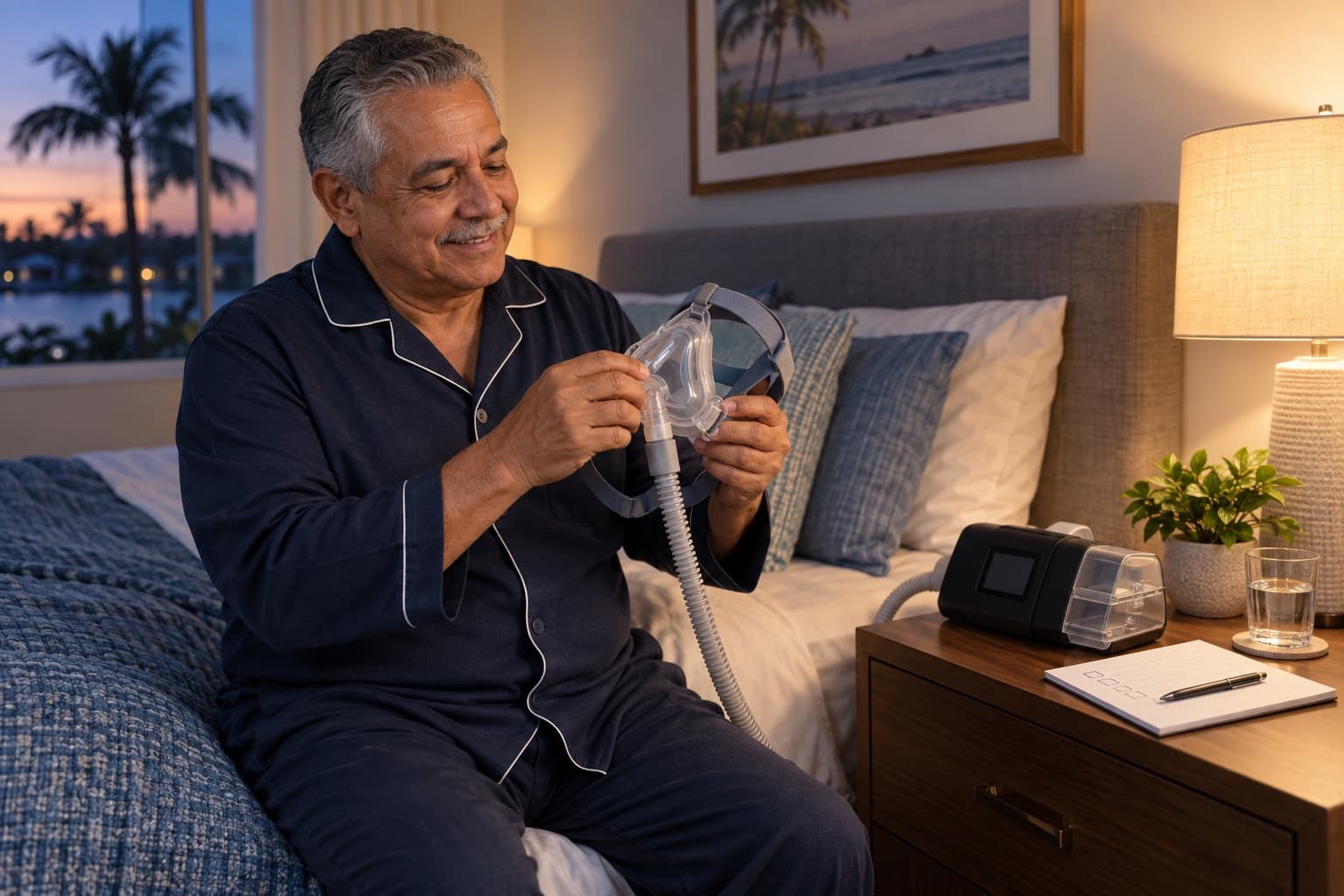
A patient preparing a comfortable and consistent bedtime routine with prescribed CPAP equipment
04

Anxiety, sleep routine and consistent use

Some people feel confined, remove the mask while asleep or struggle to combine CPAP with their normal bedtime routine. Familiarity and structured support can reduce practical barriers.

What you may notice

  • Feeling anxious or confined by the mask
  • Removing the mask without remembering
  • Difficulty arranging the tubing and bedside space
  • Frustration after several uncomfortable nights

How education can help

  • Become familiar with the mask and equipment before bedtime
  • Build a simple, repeatable nightly checklist
  • Track practical barriers to discuss during follow-up
When to escalate: New or worsening symptoms, panic, severe insomnia or persistent inability to use therapy should be discussed with the treating provider.
The right help at the right time

Who should you contact?

CPAP Home Service coordinates non-clinical education with the clinical and equipment professionals responsible for your care.

CPAP Home Service

Equipment orientation, mask-placement education, cleaning routines, common non-clinical troubleshooting and adherence support.

Your DME supplier

Mask size or style reassessment, replacement supplies, damaged equipment, warranties and supplier-specific device support.

Your treating provider

Persistent symptoms, pressure intolerance, prescribed-setting questions, diagnosis and any change to the treatment plan.

Why treatment matters

Why untreated sleep apnea should not be ignored

Sleep apnea causes breathing to stop and restart during sleep, which can reduce oxygen and repeatedly interrupt restorative rest. When it is not treated, it can affect daytime safety and may increase the risk of serious health problems.

Daytime sleepiness and accidents

Poor-quality sleep can reduce attention, reaction time and decision-making, including the ability to drive safely.

Heart and blood-vessel health

Untreated sleep apnea may raise the risk of difficult-to-control high blood pressure, abnormal heart rhythms, heart attack, heart failure and stroke.

Memory, concentration and mood

Interrupted sleep can contribute to problems with concentration, memory, decisions, behavior and emotional well-being.

Ongoing medical follow-up

A healthcare provider should confirm that treatment is working and evaluate persistent sleepiness, symptoms or equipment intolerance.

Safety: Do not drive if you feel dangerously sleepy. Call 911 for chest pain, severe trouble breathing or another medical emergency.

Trusted medical sources

Health-risk statements on this page are based on patient information from the U.S. National Heart, Lung, and Blood Institute and MedlinePlus.

You do not have to adapt to CPAP alone.

Get clear, bilingual, non-clinical education remotely or at home across Southwest Florida and Miami.

This page covers technical PAP education. RPSGT support does not diagnose, prescribe or change prescribed settings; clinical NP consultations are offered separately.